


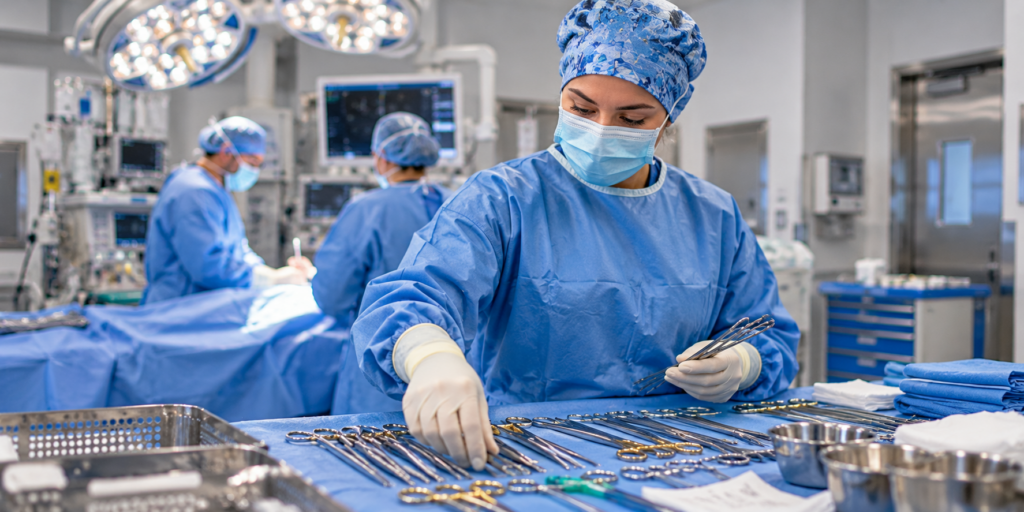
Surgical technology careers offer opportunities for people who want a meaningful, hands-on role in healthcare. Surgical technologists work alongside surgeons, nurses, and other professionals to prepare operating rooms, maintain sterile environments, and support patient safety.
If you are exploring operating room careers, understanding work schedules and responsibilities can help you decide whether surgical technology fits your goals and lifestyle.
At Stautzenberger College, students can develop practical skills through career-focused surgical technology education that combines classroom learning, laboratory training, and clinical experience.
What Do Surgical Technology Work Schedules Look Like?
Surgical technologists work in hospitals, outpatient surgery centers, and other healthcare facilities. Their schedules depend on the employer, surgical specialty, staffing needs, and types of procedures performed.
How Surgical Schedules Affect Working Hours
Some surgical facilities schedule procedures in advance, allowing employees to anticipate portions of their workday. However, surgery durations can change, and unexpected circumstances may affect when a shift ends.
Depending on the workplace, surgical technologists may experience:
- Scheduled daytime procedures.
- Early morning shifts or extended workdays.
- Rotating shifts or weekend assignments.
- On-call responsibilities for urgent procedures.
An outpatient surgical center may have different scheduling patterns than a hospital providing emergency surgery. Neither setting guarantees fixed hours or a particular work-life balance.
On-Call, Weekend, and Emergency Responsibilities
Surgical technologists employed in hospitals may work or remain on call during nights, weekends, and holidays. Some shifts can last longer than eight hours.
The U.S. Bureau of Labor Statistics identifies these scheduling demands as part of the profession. Before accepting a position, candidates should ask about shift length, overtime expectations, and on-call frequency.
What Affects Work-Life Balance in Surgical Technology?
Work-life balance is personal. A schedule that works well for one person may be difficult for someone managing childcare, transportation, or other responsibilities.
Factors worth considering include:
- Shift length: How long are typical workdays, and can procedures run late?
- On-call coverage: How often must employees remain available outside scheduled hours?
- Commute: How far is the workplace, especially during early or overnight shifts?
- Physical demands: How much standing, lifting, and movement does the position require?
- Employer expectations: Are weekend assignments, holidays, or overtime common?
Surgical technology also requires concentration, teamwork, and the ability to respond calmly in demanding situations. Professionals may stand for extended periods and assist with equipment or supplies.
Understanding these responsibilities can help prospective students evaluate the profession realistically rather than assuming every surgical technology position offers predictable hours.
What to Look for in a Surgical Technology Program
The quality and structure of your education matter when preparing for operating room careers.
When researching surgical technology programs, consider:
- Hands-on laboratory instruction and supervised clinical experience.
- Faculty with professional operating room experience.
- Clear class, laboratory, and clinical scheduling requirements.
- Programmatic accreditation and certification eligibility.
- Instruction in sterile technique, surgical instrumentation, and patient safety.
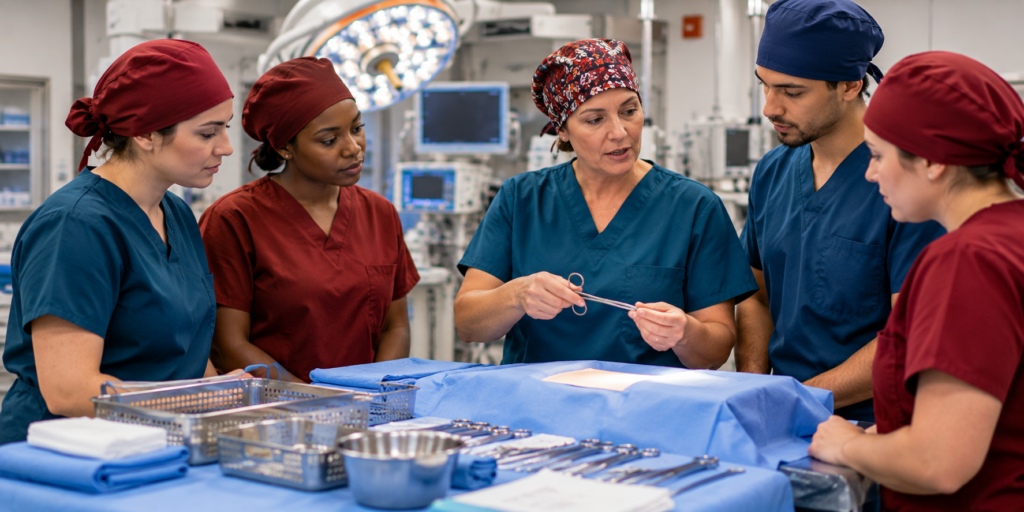
Students should also understand the differences between classroom coursework and required clinical experiences. Clinical schedules may depend on healthcare facility availability and may not offer the same flexibility as online assignments.
Before enrolling, ask an admissions advisor about program expectations, clinical placement requirements, and any additional obligations.
How Stautzenberger College Prepares Surgical Technology Students
Stautzenberger College’s Surgical Technology Associate Degree is an 18-month, blended program offered at the Maumee, Ohio, campus.
The curriculum combines classroom instruction, hands-on laboratory simulations, and supervised clinical experience. Students study anatomy, microbiology, surgical procedures, instrumentation, sterile technique, and patient safety.
The program is programmatically accredited by the Accrediting Bureau of Health Education Schools (ABHES) and prepares students for the Certified Surgical Technologist (CST) examination. Certification is not automatically awarded upon graduation.
Students also have access to faculty guidance and career-focused support. Because attendance and clinical requirements vary, prospective students should confirm scheduling details directly with the college.
Explore Surgical Technology Training at Stautzenberger College
Choosing a healthcare career involves more than comparing work schedules. Your interests, preferred responsibilities, and willingness to meet the demands of an operating room environment all matter.
If surgical technology careers interest you, explore Stautzenberger College’s Surgical Technology program or connect with an admissions advisor to discuss the curriculum, clinical training, and scheduling expectations.