


How Your Vet Tech A.A.S. Opens Doors to Zoos, Labs, and Specialty Animal Care?

If you feel an undeniable pull toward animals, you probably already know that a veterinary technician assists a veterinarian, providing essential support in everything from wellness exams to surgical prep. It’s a rewarding, compassionate job, but many prospective students stop there, limiting their vision to the local, general practice clinic.
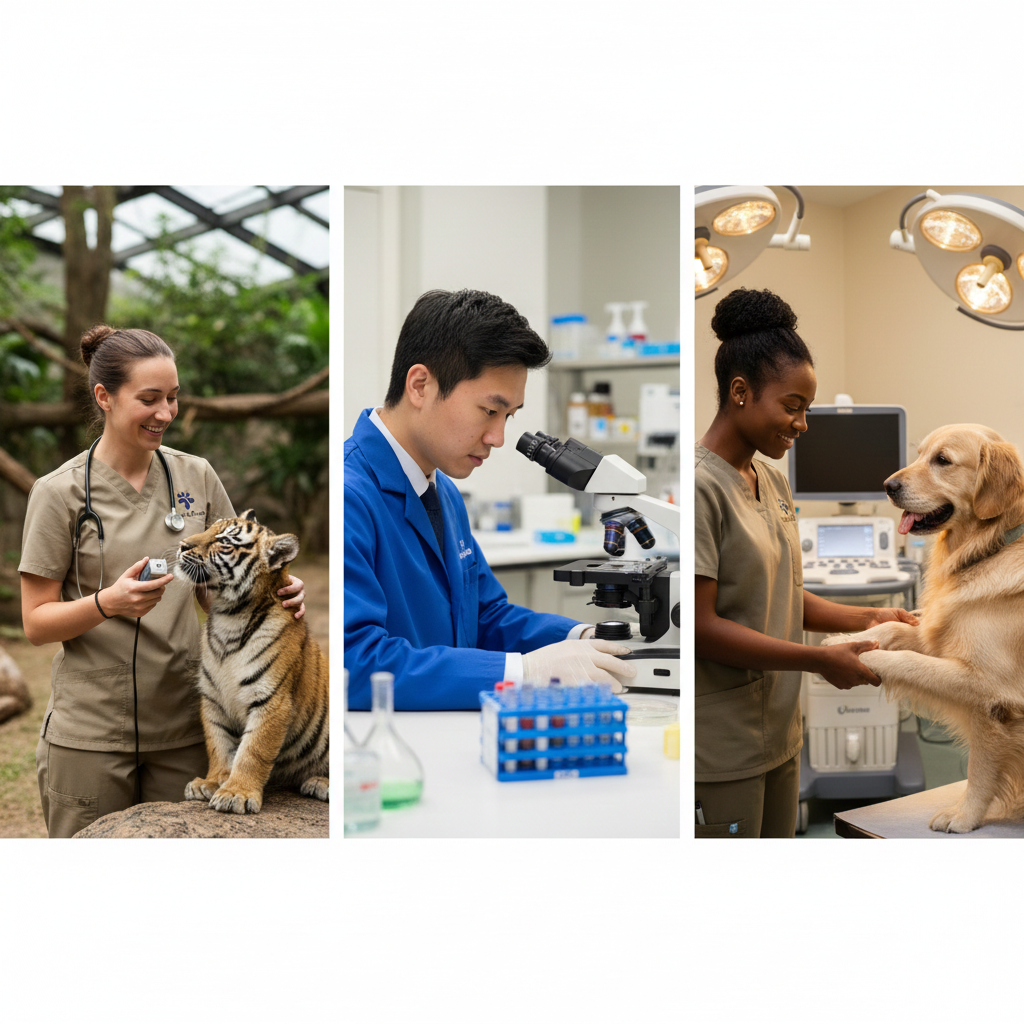
Did you know that your Vet Tech A.A.S. Degree can be the golden ticket to working with exotic animals at a major zoo, conducting vital medical research
in a lab, or saving lives in an emergency surgical center?
The problem is that many people search “what do vet techs do” and only see the routine. They don’t realize that the most specialized, high-demand, and often higher-paying animal care roles require a specific, credentialed expertise that only an Associate of Applied Science (A.A.S.) degree can provide. These employers—from pharmaceutical labs to prestigious zoos—cannot risk hiring staff without proven, comprehensive training.
The Stautzenberger College Veterinary Technician A.A.S. Degree doesn’t just prepare you for a general clinic; it unlocks highly specialized, high-demand, and often higher-paying opportunities in fields requiring advanced technical skills and formalized training, giving you unparalleled career flexibility.
Answering the Core Questions
Defining the Role: What Do Vet Techs Do?
First and foremost, what do vet techs do? They are the nurses of the animal world. They are licensed, credentialed professionals who perform essential medical
and technical work under the supervision of a licensed veterinarian. This includes:
-
- Anesthesia and Pain Management: Monitoring vital signs during surgery and managing post-operative recovery.
-
- Surgical Assistance: Preparing the operating room, ensuring sterility, and handing instruments to the surgeon.
-
- Laboratory Work: Performing blood tests, urinalysis, and microscopic evaluations in the on-site lab.
-
- Client Education: Communicating complicated diagnoses and treatment plans to pet owners.
This comprehensive skillset is the foundation, but it is the depth of knowledge provided by the A.A.S. that qualifies you for the next level of employment.
The Salary Reality: How Much Do Vet Techs Make?
While general practice clinics offer solid, competitive starting salaries, you might be asking yourself, “how much do vet techs make” in the specialized fields? The answer
is that specialization commands a premium.
While starting out in a standard veterinary hospital provides critical experience and a respectable income, roles in specialty clinics, research facilities, or zoo environments often offer higher compensation. This is because these positions require specific certifications and advanced knowledge—the exact kind of expertise gained through
the two years of dedicated A.A.S. coursework. Your investment in specialized education leads directly to a higher-end salary range.
The A.A.S. Requirement: How to Become a Vet Tech
If you want to move beyond basic animal husbandry and into a medical role, you must achieve licensure. The gold standard for licensure and entry into specialized fields
is the A.A.S. Degree. This is the official answer to “how to become a vet tech” who is truly competitive.
The Stautzenberger College program is accredited, meaning its curriculum meets the rigorous standards required for you to take the Veterinary Technician National Examination (VTNE). The accreditation and depth of study—covering pharmacology, radiography, surgical procedures, and animal restraint—are non-negotiable prerequisites for state licensure and the gateway to high-level, specialized careers.
Three High-Demand Specialty Career Paths
The real value of the A.A.S. degree is the career flexibility it provides. When employers in specialized fields see that credential, they know you possess the necessary scientific and clinical foundation.
A. Path 1: Exotic & Wildlife Medicine (The Zoo Keeper)
If your dream is to work with tigers, giraffes, primates, or sea life, your A.A.S. degree is essential. Working in a zoo or wildlife rehabilitation center means working
with unique species, each with distinct needs for nutrition, handling, and medical care.
Why the A.A.S. is required: Zoos are heavily regulated institutions that must meet strict federal and professional standards. They cannot use uncredentialed staff for high-level tasks. A certified Vet Tech is needed for:
-
- Husbandry and Nutrition: Developing and managing diets specific to non-domestic species.
-
- Unique Restraint and Handling: Safely managing and assisting with medical procedures on animals that cannot simply be picked up.
-
- Specialized Pharmacology: Administering medications based on species-specific metabolic rates.
The Stautzenberger program provides foundational knowledge that includes the handling and care of exotic animal species, making you a prepared candidate for this exciting field.
B. Path 2: Veterinary Research and Laboratories (The Scientist)
This path allows you to contribute to animal and human health on a macroscopic scale. Vet Techs are vital in pharmaceutical companies, universities,
and government facilities, assisting in toxicology studies, clinical trials, or developing new vaccines and drugs.
Why the A.A.S. is required: These roles demand precision and ethical practice. Your degree training covers:
-
- Sterile Technique Mastery: Essential for maintaining clean environments and preventing contamination in lab settings.
-
- Advanced Lab Skills: Performing complex assays, pathology testing, and precise data collection necessary for scientific reporting.
-
- Regulatory Compliance: Understanding protocols set by the Institutional Animal Care and Use Committee (IACUC).
If you are precise, detail-oriented, and passionate about the science behind medicine, this field offers a stimulating and highly respected career path.
C. Path 3: Specialty Clinics (The Specialist)
General practice covers the basics, but specialty clinics are where cutting-edge technology and deep medical expertise converge. These include fields like Veterinary Cardiology, Oncology, Dermatology, or Emergency/Critical Care (ER).
Why the A.A.S. is required: Specialty clinics are high-tech, fast-paced environments where mistakes are unforgivable. They require deep knowledge in areas that demand formalized training:
-
- Advanced Imaging: Assisting with ultrasounds, MRIs, and CT scans.
-
- Intensive Care Monitoring: Managing IV pumps, blood transfusions, and mechanical ventilation in critical patients.
-
- Advanced Anesthesia: Managing anesthesia for high-risk procedures, such as open-heart surgery or complex cancer removal.
Working in a specialty clinic guarantees continuous learning, high technical engagement, and positions you for the maximum Vet Tech A.A.S. Degree earning potential.
FAQs
Q1. How to become a vet tech who is qualified to work in a zoo or research lab?
A: The most direct path is obtaining the Veterinary Technician A.A.S. Degree from an accredited institution like Stautzenberger College. These specialized facilities require state licensure (which the A.A.S. prepares you for) and proof of comprehensive training in areas like advanced pharmacology, sterile technique, and specialized animal husbandry. Your degree proves you have the technical and scientific background needed for high-risk, regulated environments.
Q2. Is the A.A.S. degree necessary, or can I just get certified after a short training program?
A: For entry-level work in some clinics, short training programs might suffice, but they will severely limit your career potential. The A.A.S. Degree is essential if you want
to access the high-demand, high-paying roles in research, specialty medicine (like ER or Oncology), or zoos. These employers demand the comprehensive, two-year level of instruction and hands-on laboratory experience that the A.A.S. provides. Without it, your career advancement, and potential salary, will likely hit a ceiling.
Q3. How much do vet techs make in specialty clinics compared to general practice?
A: Salaries for Veterinary Technicians in specialty clinics (e.g., internal medicine, surgery, emergency care) are often higher than those in general practice. This premium reflects the need for advanced skills in areas like anesthesia, intensive care monitoring, and advanced imaging. Your A.A.S. degree, combined with experience in these fast-paced environments, places you in a higher compensation bracket, making the investment in your education highly worthwhile.
Become a Vet Tech, Today!
Your passion for animals deserves more than a standard career path. The Veterinary Technician A.A.S. Degree is the crucial professional credential that provides the flexibility and advanced skills needed to move beyond general practice and into rewarding, specialized careers.
The question is no longer just “what do vet techs do,” but what you want to do with your career. Are you ready to work in a high-tech ER, a respected research lab, or the zoo of your dreams? The A.A.S. degree from Stautzenberger College provides the scientific depth and clinical proficiency that specialty employers highly seek.
Ready to turn your passion for animals into a specialized, high-paying career at a zoo, lab, or specialty clinic? Start the Veterinary Technician (A.A.S. Degree) Program at Stautzenberger College to gain the credentials highly sought after by specialty employers.
We encourage you to ask our Admissions Team about the program’s advanced modules on exotic animal handling and laboratory procedures—your first step toward a truly specialized career.