


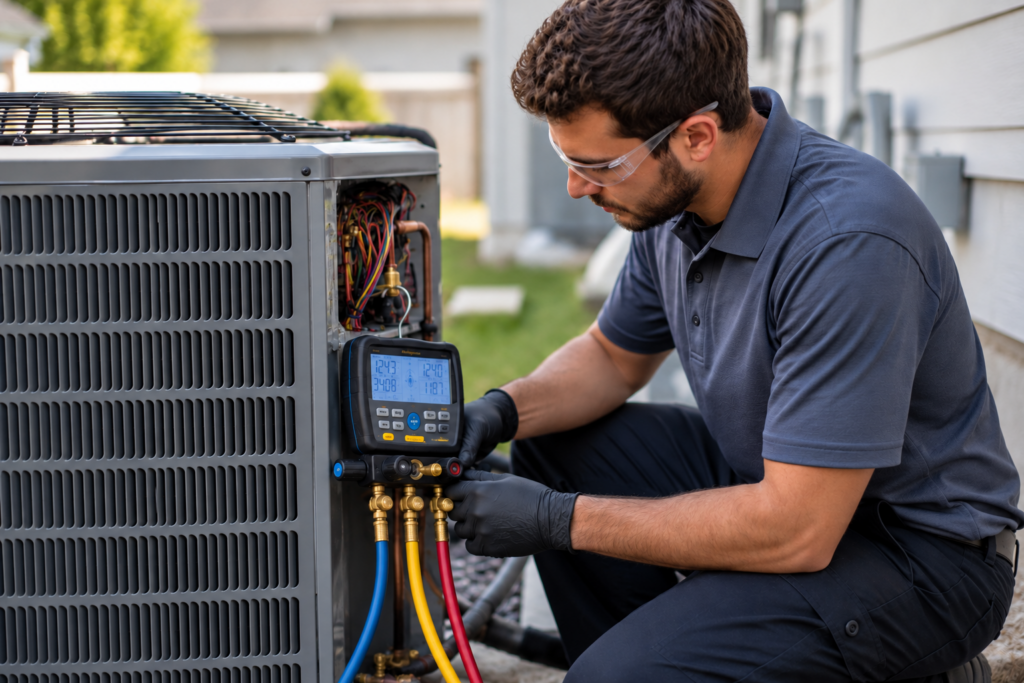
Heating, ventilation, air conditioning, and refrigeration (HVAC/R) systems play an important role in keeping homes, businesses, and other buildings comfortable and functional. These systems require regular maintenance, accurate diagnostics, and occasional repairs or replacement.
As HVAC/R equipment becomes more sophisticated, technicians need a combination of mechanical knowledge, electrical skills, and safe work practices.
According to the U.S. Bureau of Labor Statistics (BLS), employment of heating, air conditioning, and refrigeration mechanics and installers is projected to grow 11% from 2025 to 2035. This outlook reflects the continuing need for technicians who can install, maintain, and repair heating and cooling systems.
For individuals exploring skilled trades, understanding what drives demand for HVAC professionals can help clarify the skills and training associated with this career field.
What Drives Demand for HVAC Technicians?
Several factors contribute to the ongoing need for HVAC technicians, including construction, equipment replacement, advancing technology, and routine maintenance.
Construction and Equipment Upgrades
New residential and commercial buildings require heating, cooling, and ventilation systems designed for their intended use.
Existing buildings may also need equipment upgrades to improve performance, accommodate changing needs, or replace aging components.
HVAC technicians help install and service these systems while following applicable building codes, manufacturer instructions, and safety requirements.
Maintenance and System Replacement
Heating and cooling equipment requires regular attention throughout its operating life.
Technicians may inspect components, replace filters, evaluate system performance, identify worn parts, and troubleshoot mechanical or electrical problems.
Even when construction activity changes, existing HVAC systems continue to require maintenance and occasional repairs.
As equipment reaches the end of its service life, technicians may also be needed to remove older units and install replacements.
Smart Technology and Indoor Air Quality
Modern HVAC/R equipment increasingly incorporates electronic controls, sensors, variable-speed components, and connected thermostats.
These technologies can help manage temperature, airflow, and system performance, but they also introduce additional diagnostic requirements.
Technicians may need to interpret electronic controls, evaluate sensor readings, and identify problems involving multiple interconnected components.
Ventilation, filtration, and indoor air quality are also important considerations in residential and commercial HVAC systems.
Understanding how these components interact can help technicians evaluate system performance and recommend appropriate service procedures within their professional responsibilities.
Core Technical Skills for HVAC Professionals
HVAC/R work combines practical technical abilities with analytical problem-solving.
Technicians must understand how systems operate, recognize potential faults, and use appropriate tools while following established safety procedures.
Electrical and Mechanical Fundamentals
HVAC/R equipment includes motors, compressors, electrical controls, wiring, and mechanical components.
Technicians may need to read wiring diagrams, interpret electrical schematics, and understand how circuits and controls interact.
Electrical testing requires appropriate training, equipment, and safety procedures. Workers must follow applicable de-energization, lockout/tagout, and electrical hazard-control requirements.
A strong foundation in electrical and mechanical principles supports accurate troubleshooting and safe equipment servicing.
System Diagnostics and Troubleshooting
Diagnosing HVAC/R problems often requires evaluating several system conditions rather than relying on a single measurement.
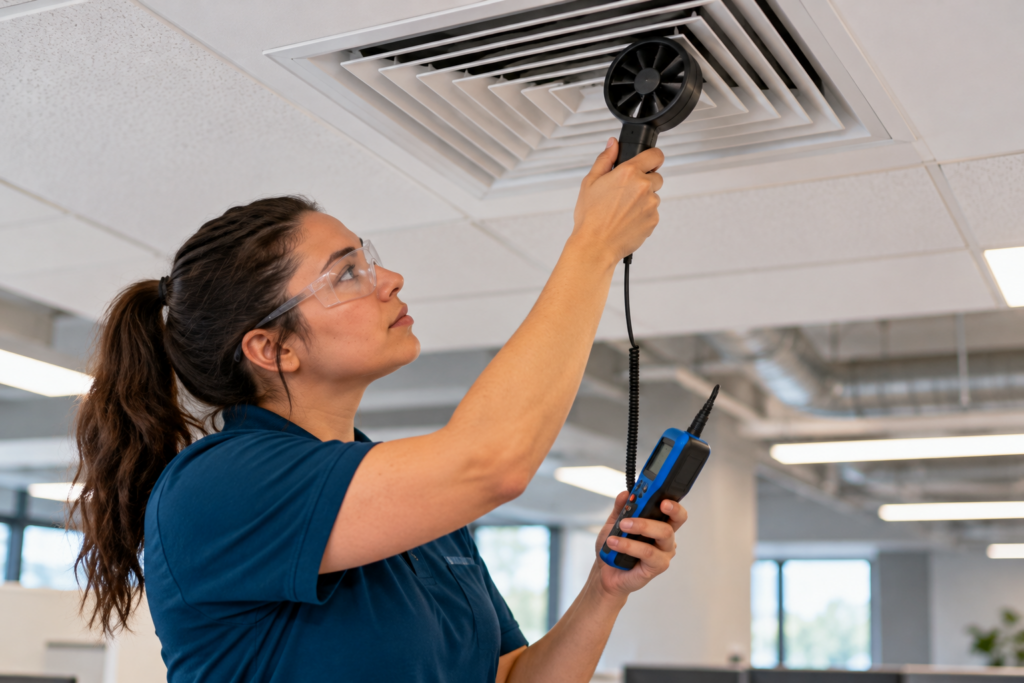
Caption: HVAC technicians use specialized diagnostic tools to evaluate airflow and assess heating, ventilation, and air conditioning system performance.
Depending on the equipment and symptoms, technicians may use:
- Digital multimeters to evaluate electrical conditions.
- Manifold gauges and temperature instruments to assess refrigerant-system performance.
- Airflow measurement tools to evaluate ventilation and distribution.
- Manufacturer diagnostic procedures to identify component or control issues.
Technicians must interpret these measurements together with equipment specifications, operating conditions, and safety requirements.
This approach helps distinguish electrical faults, airflow restrictions, refrigerant-system problems, and other potential causes of poor performance.
Refrigerant Safety and EPA Certification
Refrigerant handling is another important area of HVAC/R work.
Federal regulations establish requirements for certain refrigerant-related activities, including recovery, handling, and technician certification.
Under the U.S. Environmental Protection Agency’s Section 608 certification program, technicians performing covered activities must hold the appropriate certification, subject to applicable exceptions.
EPA Section 608 Universal Certification covers the equipment categories addressed by Type I, Type II, and Type III certification. Earning it requires passing the applicable EPA-approved examinations.
Completing an HVAC/R training program does not automatically grant EPA certification.
Changes in refrigerant regulations and the adoption of lower-global-warming-potential alternatives also create additional safety and training considerations. Some newer refrigerants have different flammability classifications and handling requirements.
Technicians must follow applicable regulations, manufacturer specifications, and safe service procedures.
How Stautzenberger College Supports HVAC/R Career Preparation
Stautzenberger College offers an HVAC/R Diploma designed to help students develop foundational technical knowledge and practical skills relevant to heating, ventilation, air conditioning, and refrigeration systems.
Our 10-month, 64-quarter-credit program combines classroom instruction with hands-on, on-campus training. You’ll explore HVAC/R systems and components, electrical controls, troubleshooting procedures, and preparation for EPA certification examinations.
Through our Stautz Strong approach, we emphasize supportive instruction and student development as you build the technical knowledge and practical skills relevant to the HVAC/R field.
Our admissions team can help you explore current campus availability, scheduling options, and program requirements.
Preparing for Employment Requirements
Formal education can provide a foundation for exploring entry-level HVAC/R opportunities, but employment qualifications vary.
Some positions may require EPA certification, state or local licensing, additional training, or supervised work experience.
Employer expectations also depend on the responsibilities of the position.
Completing a diploma does not guarantee employment, professional licensure, or certification.
Explore HVAC/R Training at Stautzenberger College
HVAC professionals contribute to the installation, maintenance, and repair of systems used in homes, businesses, and other facilities.
As equipment and regulations evolve, technicians benefit from strong technical fundamentals, diagnostic skills, and an understanding of safe work practices.
If you’re interested in exploring the skilled trades, our HVAC/R Diploma offers an opportunity to study these principles through career-focused technical education.
Explore our HVAC/R program to learn about the curriculum, admissions requirements, and available class schedules. You can also request information to connect with our admissions team.