


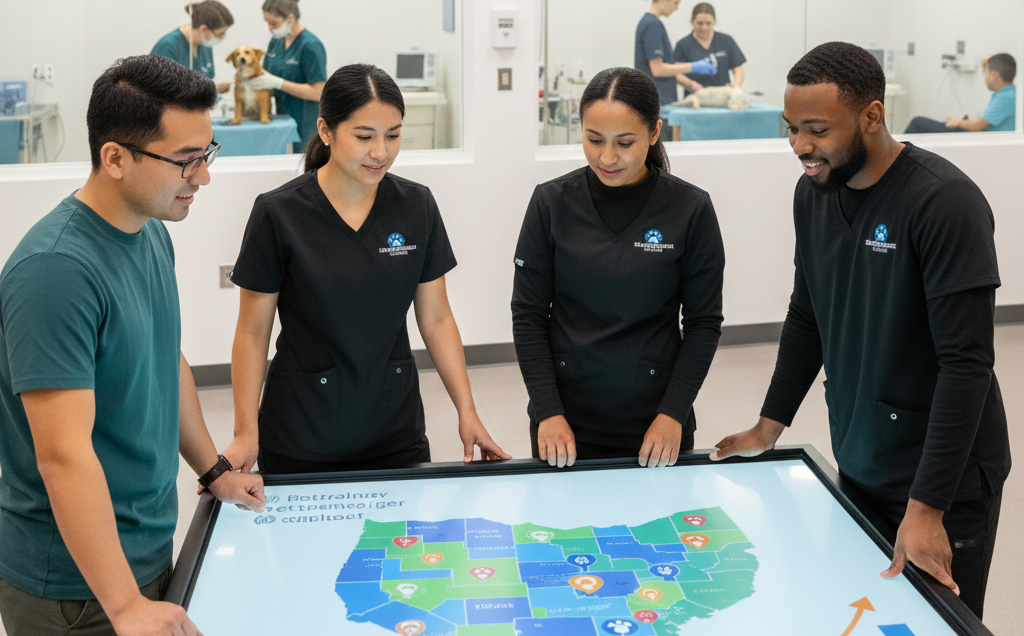
The love for animals is a powerful motivator, driving many to seek careers where they can make a tangible difference in the lives of pets and their owners. For those who want to blend compassion with skilled medical care, becoming a Veterinary Technician offers a fulfilling and dynamic professional path. These essential healthcare professionals are the backbone of animal hospitals and clinics, providing critical support to veterinarians in a wide array of medical procedures, diagnostics, and patient care.
At Stautzenberger College, our Veterinary Technician (A.A.S. Degree) is designed to transform animal lovers into highly competent and compassionate veterinary professionals.
We provide the comprehensive education and hands-on training necessary to excel in this demanding field, preparing you for a rewarding career. If you’re considering a future where you can directly impact animal well-being, and you’re curious about the opportunities in the Buckeye State, this blog will explore the promising job outlook for Veterinary Technicians in Ohio.
The Indispensable Role of a Veterinary Technician

A Veterinary Technician, often referred to as a “vet tech,” performs many of the same duties for animals that nurses do for humans. They are crucial to the efficient and effective operation of any veterinary practice, whether it’s a small local clinic, a large animal hospital, an emergency room, or even a research facility.
Diverse Responsibilities: A Day in the Life
The daily tasks of a Veterinary Technician are incredibly varied and require a broad skill set:
- Assisting Veterinarians: Preparing animals for exams, assisting during surgeries, holding animals during procedures, and monitoring vital signs.
- Administering Medications & Treatments: Giving injections, oral medications, and performing treatments as directed by the veterinarian.
- Laboratory Procedures: Collecting blood, urine, and tissue samples; performing in-house lab tests; and preparing samples for external analysis.
- Radiology & Imaging: Taking X-rays, ultrasounds, and other diagnostic images.
- Anesthesia Monitoring: Monitoring animals under anesthesia during surgical procedures, which requires a keen eye for detail and quick response.
- Dental Care: Performing dental cleanings (scaling and polishing) and assisting with extractions.
- Client Education: Communicating with pet owners about pet care, medication instructions, post-operative care, and preventative health.
- Emergency & Critical Care: Assisting with emergency cases, providing first aid, and stabilizing critically ill animals.
- Record Keeping: Maintaining accurate and detailed patient records.
- Surgical Preparation: Sterilizing instruments, preparing the surgical suite, and ensuring all necessary equipment is ready.
This wide range of duties highlights why vet techs are so indispensable to veterinary medicine. They bridge the gap between veterinarians and pet owners, providing expert care and compassionate support.
The Job Outlook for Veterinary Technicians in Ohio: A Promising Picture
The demand for Veterinary Technicians nationwide is strong, and Ohio is no exception. Several factors contribute to this positive job outlook:
1. Growing Pet Ownership
The COVID-19 pandemic saw a significant increase in pet adoption rates, and this trend continues. More households owning pets, combined with a growing willingness of owners to invest in advanced veterinary care, directly translates to a higher demand for veterinary services. Ohio, with its large population, naturally reflects this national trend.
2. Advancements in Veterinary Medicine
Veterinary medicine is becoming increasingly sophisticated, offering advanced diagnostics, specialized surgeries, and innovative treatments that were once only available for humans. This complexity requires more skilled support staff, particularly Veterinary Technicians, who are trained to operate advanced equipment and assist in intricate procedures.
3. Specialization and Diversification
The field of veterinary medicine itself is specialized. Beyond general practice, there are emergency clinics, specialty hospitals (e.g., oncology, dermatology, ophthalmology), exotic animal practices, and even mobile vet services. Each of these requires qualified Veterinary Technicians, opening up diverse career paths.
4. Retirement and Workforce Needs
Like many healthcare professions, the veterinary field faces a steady need for new professionals as experienced technicians retire or transition to other roles. This ongoing turnover creates consistent openings for new graduates.
The Stautzenberger College Advantage
Our Veterinary Technician (A.A.S. Degree) program at Stautzenberger College is specifically designed to prepare you for this promising job market in Ohio and beyond. Our curriculum includes:
-
- Comprehensive Science Foundation: In-depth courses in anatomy, physiology, pharmacology, and microbiology tailored for animal health.
-
- Hands-on Clinical Experience: Extensive practical training in our state-of-the-art labs and through supervised clinical rotations in real veterinary settings. You’ll gain experience with small animals, large animals, and potentially exotic species.
-
- Specialized Skills Training: Mastery of surgical assisting, anesthesia monitoring, dental prophylaxis, diagnostic imaging, and laboratory procedures.
-
- Professional Development: Training in client communication, ethical practices, and regulatory compliance.
-
- Eligibility for Certification: Our program is accredited, making graduates eligible to sit for the Veterinary Technician National Exam (VTNE), which is necessary for credentialing in Ohio.
By providing both theoretical knowledge and practical, real-world skills, we ensure our graduates are highly competitive and ready to make an immediate impact in any veterinary setting.
Become a Certified Vet Tech, Today!
The job outlook for Veterinary Technicians in Ohio is exceptionally bright, driven by increasing pet ownership, advancements in veterinary medicine, and the expanding scope of veterinary services.
If you possess a genuine passion for animal care and are seeking a career that is both challenging and deeply rewarding, becoming a Veterinary Technician offers a secure and fulfilling future.
With Stautzenberger College’s comprehensive Veterinary Technician (A.A.S. Degree) Program, you will receive the expert training and practical experience necessary to pass your national certification and step confidently into a high-demand role in Ohio’s thriving animal healthcare sector.
Embrace your passion and embark on a career where you can truly be an animal’s best friend.
FAQs
Q1. Is national certification required to work as a Veterinary Technician in Ohio?
A: Yes, in Ohio, you must be a Registered Veterinary Technician (RVT). To become an RVT, you must graduate from an AVMA-accredited program (like Stautzenberger College’s) and pass the Veterinary Technician National Exam (VTNE).
Q2. What are the common work environments for Veterinary Technicians?
A: Veterinary Technicians primarily work in private veterinary clinics and animal hospitals, including emergency and specialty clinics. Other opportunities exist in zoos, aquariums, wildlife rehabilitation centers, research laboratories, pharmaceutical companies, and even in public health.
Q3. What is the earning potential for Veterinary Technicians in Ohio?
A: Starting salaries for new graduates in Ohio can vary based on location and type of practice, but generally range from $35,000 to $45,000 annually. With experience and specialization, this can increase significantly, with experienced RVTs earning $50,000 or more per year.