


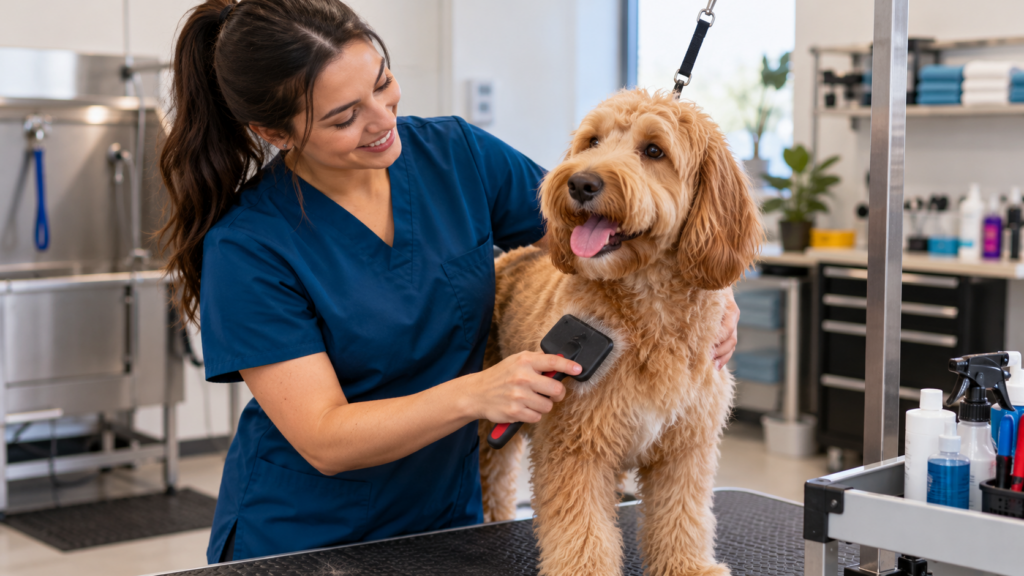
Working with animals offers several career paths for people interested in animal care. Veterinary assistants often work in clinical settings, where they support animal handling, patient observation, and daily care under veterinary supervision. Over time, some may explore other animal care roles, including pet grooming, to pursue different responsibilities and work environments.
Moving from veterinary assisting into pet grooming can offer a different way to work with animals. Grooming generally focuses on coat care, hygiene, and routine services rather than clinical treatment. Experience observing animal behavior and recognizing signs of discomfort may also be useful when providing grooming services.
At Stautzenberger College, animal care education emphasizes developing practical knowledge and skills relevant to working with animals. Exploring different animal care career paths can help you understand how responsibilities, training needs, and work environments vary.
Transferring Animal Care Skills to Pet Grooming
Veterinary assisting and pet grooming involve different responsibilities, but some skills can transfer between the two fields. Experience with animal behavior and safe handling may help when working with anxious or sensitive pets in a grooming environment. However, grooming also requires its own techniques, equipment knowledge, and safety practices.
Experience in both veterinary assisting and pet grooming may be useful in animal care businesses that value safe handling and attentive service. During grooming appointments, professionals may notice changes in a pet’s skin, coat, ears, or behavior. These observations can be shared with the owner, who can consult a veterinarian when appropriate.
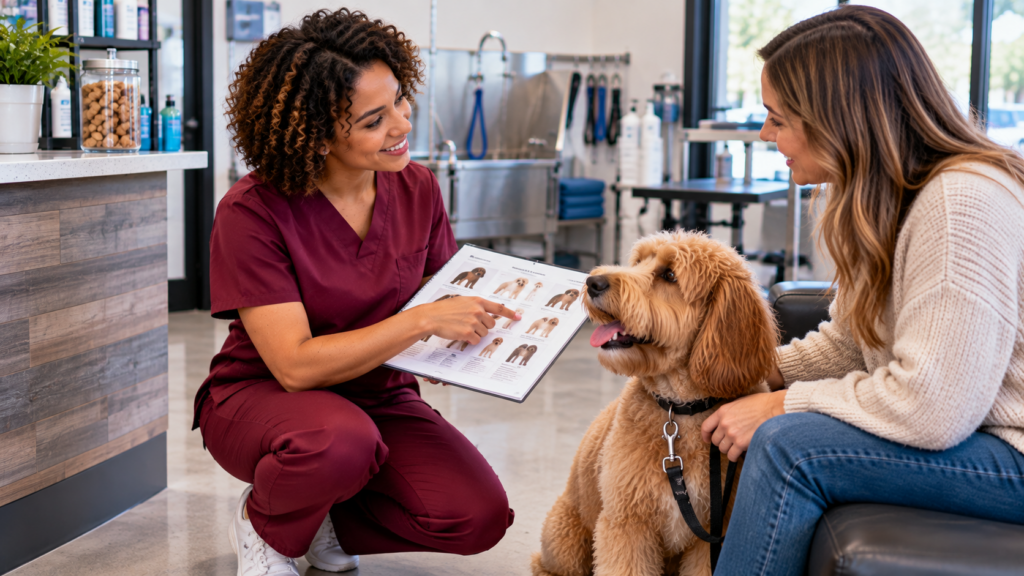
Some transferable skills include:
- Noticing visible skin irritation, ear changes, or possible external parasites and recommending veterinary follow-up when appropriate
- Applying appropriate low-stress handling techniques while recognizing when an animal needs a break
- Recognizing behavioral signs of stress, fear, or possible discomfort
- Communicating observations clearly and professionally to pet owners
While these skills provide a useful foundation, veterinary assisting experience does not automatically prepare someone to perform grooming services. Groomers must also learn safe bathing, brushing, drying, clipping, and coat-specific techniques. Understanding how to use grooming tools appropriately is important for protecting both animals and professionals.
Transferable Skills and Career Considerations
The American Pet Products Association publishes industry information that can help readers explore the broader pet care market. The U.S. Bureau of Labor Statistics provides employment outlook information for veterinary assistants and laboratory animal caretakers. Because pet grooming is a separate occupation, its career outlook should be evaluated independently rather than inferred from veterinary assisting projections.
Transferable skills such as animal handling, observation, and communication can be useful in both clinical and grooming environments. Routine grooming supports coat and hygiene maintenance and may provide opportunities to notice visible changes that warrant veterinary attention. However, grooming services do not replace preventive veterinary examinations or medical care.
Daily responsibilities can also differ. Veterinary assistants may support clinical appointments, prepare examination areas, and assist veterinary teams with patient care. Groomers generally work through scheduled bathing, coat maintenance, and styling appointments, although the pace and physical demands vary by workplace.
Both roles require patience, physical stamina, and careful attention to animal behavior. Grooming professionals may spend considerable time standing, handling wet animals, and using specialized equipment. Recognizing these differences can help you develop realistic expectations before pursuing additional training.
If you’re considering a move into pet grooming, compare the responsibilities, training requirements, and daily work environments of both fields. This can help you decide which path aligns with your interests and goals. Explore Stautzenberger College’s Veterinary Assistant & Grooming program to learn about training that combines veterinary assisting and grooming skills.
Exploring Animal Care Training at Stautzenberger College
Stautzenberger College has a long history of serving students in the Toledo region through career-focused education. Program formats and scheduling options can vary, so prospective students should review the requirements of the specific animal care program they’re considering.
The “Stautz Strong” community reflects the college’s emphasis on student support throughout the educational experience.
Depending on the program, animal care training may cover topics such as anatomy, animal handling, and workplace procedures. Students should review each program’s curriculum to understand the skills it emphasizes.
Veterinary assisting and pet grooming involve different responsibilities, but Stautzenberger College’s Veterinary Assistant & Grooming program brings these areas together in one educational pathway. Students can explore how animal handling, compassionate care, and grooming-related skills support different responsibilities in animal care settings.
If you’re interested in exploring animal care training, request more information from Stautzenberger College. Learning about available programs and their requirements can help you decide which educational path best supports your goals.