


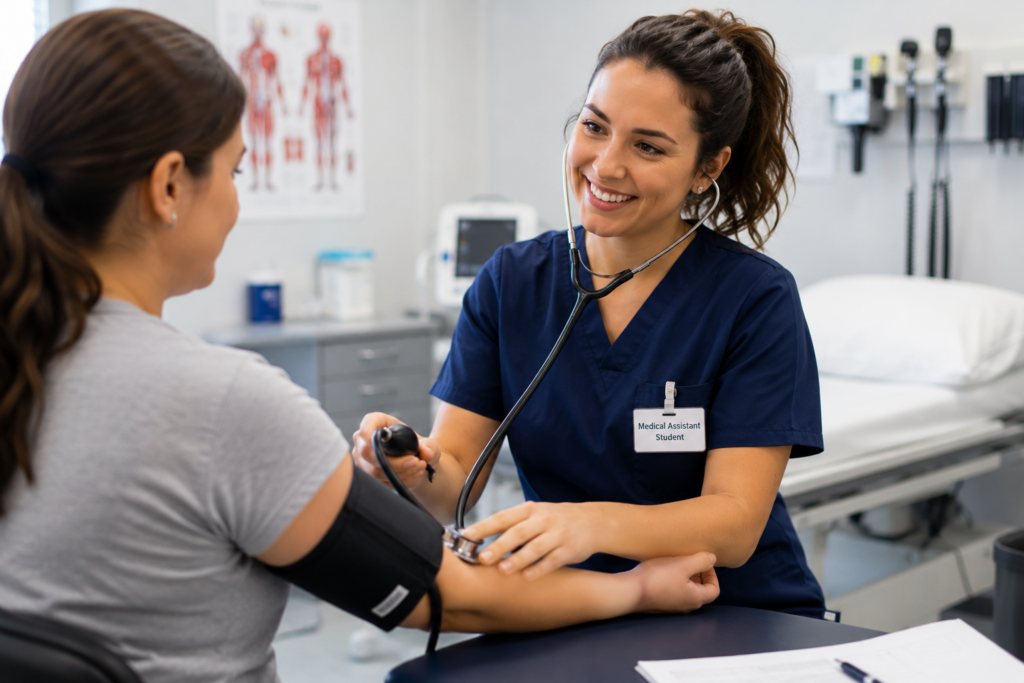
Medical assistants help healthcare offices run smoothly by supporting patient care, managing important information, and communicating with patients and providers. From taking vital signs to maintaining medical records, their work requires a combination of clinical knowledge, organization, and professionalism.
For anyone considering a healthcare career, understanding the medical assistant skills employers value can help clarify what the profession involves and how to prepare for it.
At Stautzenberger College, our Medical Assistant program focuses on developing practical skills for clinical and administrative responsibilities. These foundational abilities can help students prepare for the expectations of today’s healthcare workplaces.
Essential Clinical Skills for Medical Assistants
Medical assistants often help prepare patients for appointments and support routine clinical procedures under appropriate supervision.
Although specific duties vary by employer and applicable state requirements, several foundational clinical skills are important across healthcare settings.
Taking and Recording Vital Signs
Measuring vital signs is a common responsibility for clinical medical assistants. This may include recording blood pressure, pulse, temperature, respiratory rate, and other measurements as directed.
Accurate measurements help licensed healthcare professionals evaluate patients and make informed care decisions.
Medical assistants should also know how to recognize findings that fall outside established parameters and promptly report concerns to the appropriate clinical professional.
Their responsibility is to collect and communicate accurate information, not independently diagnose the cause of an unusual reading.
Preparing Patients and Examination Rooms
Before an appointment, medical assistants may prepare examination rooms, organize supplies, clean equipment according to workplace procedures, and help patients get ready for their visits.
Depending on their training and authorization, they may also assist with certain diagnostic tests or clinical procedures.
Following established instructions helps maintain an organized, safe environment for patients and healthcare teams.
Maintaining Accurate Patient Records
Electronic Health Records (EHRs) are widely used to document patient information and support communication among healthcare professionals.
Medical assistants may enter patient histories, update demographic information, record vital signs, and maintain other documentation within their authorized responsibilities.
Accuracy matters because healthcare professionals rely on patient records to coordinate care.
Some medical assistants also perform administrative tasks involving appointment scheduling, insurance information, billing, or coding support. These responsibilities depend on the employer, position, and training.
Recognizing and Reporting Patient Concerns
Medical assistants interact directly with patients and may be among the first healthcare team members to notice that someone needs additional attention.
For example, a patient might report worsening symptoms, appear unusually distressed, or have a vital-sign reading outside the workplace’s established parameters.
In these situations, medical assistants should follow employer protocols and promptly notify licensed clinical staff. When an emergency is suspected, they should follow established emergency procedures.
Medical assistants do not independently diagnose conditions or make clinical triage decisions. Recognizing concerns and communicating them appropriately are important parts of supporting patient safety.
Administrative Skills That Support Healthcare Operations
Medical assistants may also help manage the administrative responsibilities that keep medical offices organized.
These skills can be especially important in physicians’ offices, outpatient clinics, and other settings where clinical and administrative duties overlap.
Common responsibilities may include:
- Appointment scheduling: Coordinating visits and helping patients understand scheduling information.
- Patient registration: Collecting and updating demographic, insurance, and contact information.
- EHR management: Entering authorized information accurately and maintaining organized records.
- Office communication: Answering calls, directing questions, and sharing information with appropriate team members.
- Privacy and confidentiality: Protecting patient information through authorized access and appropriate handling of records.
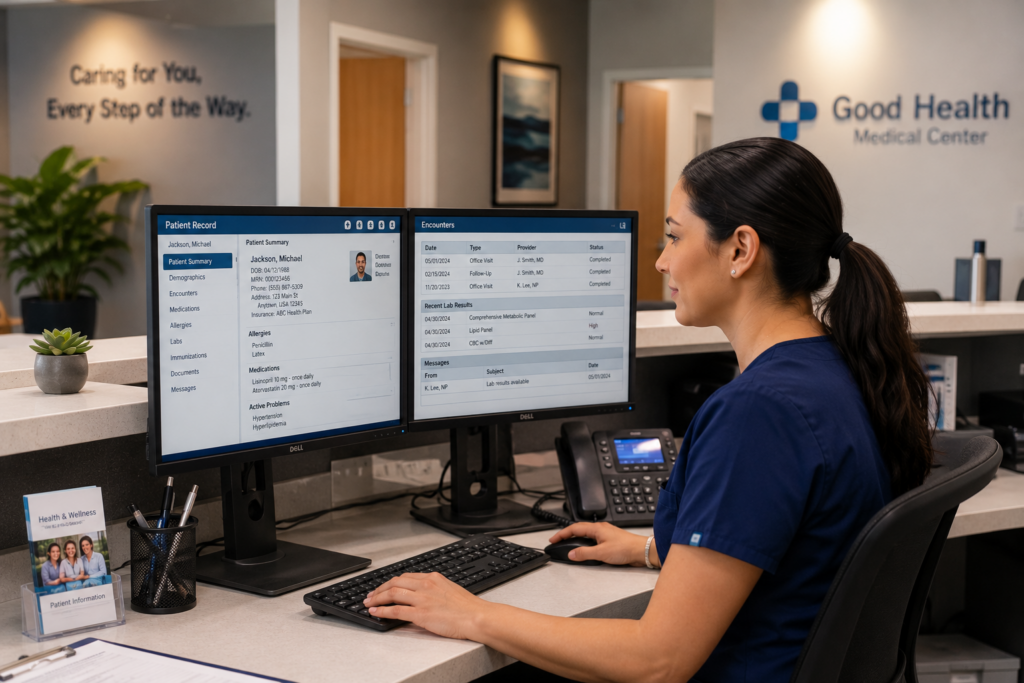
The Health Insurance Portability and Accountability Act (HIPAA) establishes federal requirements for protecting certain health information. Medical assistants must follow applicable privacy and security requirements, as well as their employer’s policies.
Understanding how clinical and administrative responsibilities connect can help medical assistants support efficient, coordinated healthcare services.
Professional Skills Healthcare Employers Value
Technical abilities are only part of the job. Medical assistants also need interpersonal and organizational skills to work effectively with patients and healthcare teams.
Communication and Empathy
Patients may feel anxious, frustrated, or uncertain during healthcare visits.
Medical assistants can help create a supportive experience by listening carefully, explaining routine processes within their role, and treating patients with patience and respect.
They should also recognize when a question or concern needs to be addressed by a licensed healthcare professional.
Teamwork and Clear Information Sharing
Medical assistants frequently communicate with physicians, nurses, administrative staff, and other healthcare professionals.
Clear communication helps ensure that important patient information reaches the appropriate team member.
For example, accurately reporting a patient’s stated symptoms, recorded vital signs, or concerns can help the healthcare team determine the appropriate next steps.
Organization and Adaptability
Healthcare offices often manage changing schedules, multiple patient appointments, and competing administrative needs.
Medical assistants may need to move between patient preparation, documentation, scheduling, and other assigned tasks while maintaining accuracy.
Staying organized, following established procedures, and communicating when priorities change can help support daily clinic operations.
Professionalism and Confidentiality
Patients trust healthcare organizations with sensitive personal information.
Medical assistants must respect patient privacy, maintain professional boundaries, and access or share protected information only as permitted.
Reliability, attention to detail, and accountability are equally important when handling records, communicating with patients, and completing assigned responsibilities.
Why Medical Assistant Skills Matter in Today’s Healthcare Industry
Medical assistants work in physicians’ offices, hospitals, outpatient care centers, and other healthcare facilities.
According to the U.S. Bureau of Labor Statistics, employment of medical assistants is projected to grow 13% from 2025 to 2035, faster than the average for all occupations.
This national projection reflects expected employment trends, not a guarantee of employment for individual graduates.
As healthcare organizations continue providing clinical and administrative services, medical assistants who understand both sides of the role can contribute to patient care and daily operations.
For prospective students, developing a foundation in clinical procedures, communication, recordkeeping, and professionalism can be an important part of preparing to enter the field.
Build Your Medical Assistant Skills at Stautzenberger College
If you’re interested in a healthcare career that combines patient interaction with clinical and administrative responsibilities, medical assistant training can help you develop foundational knowledge and practical skills.
At Stautzenberger College in Maumee, Ohio, our Medical Assistant diploma program combines classroom instruction, hands-on laboratory training, and externship experience to help students prepare for entry-level responsibilities in healthcare settings.
The program includes:
- Credential: Medical Assistant diploma
- Program length: 10 months
- Credits: 60 quarter credit hours
- Format: Hybrid, combining on-campus and online instruction
- Practical experience: Hands-on laboratory training and an externship
Students explore topics such as medical terminology, vital signs, EKGs, specimen collection, electronic health records, and medical office administration.
Through our Stautz Strong approach to career-focused education, we emphasize practical learning and professional development to help students build confidence as they prepare for healthcare environments.
Take the Next Step Toward Your Healthcare Career
Medical assistants contribute to patient care and healthcare operations through clinical skills, administrative accuracy, communication, and professionalism.
Developing these abilities can help you prepare for the responsibilities employers may expect in medical offices, clinics, and other healthcare settings.
Ready to explore medical assistant training? Explore the Stautzenberger College Medical Assistant diploma program, or contact our admissions team to learn more about the curriculum, admissions requirements, and upcoming start dates.