


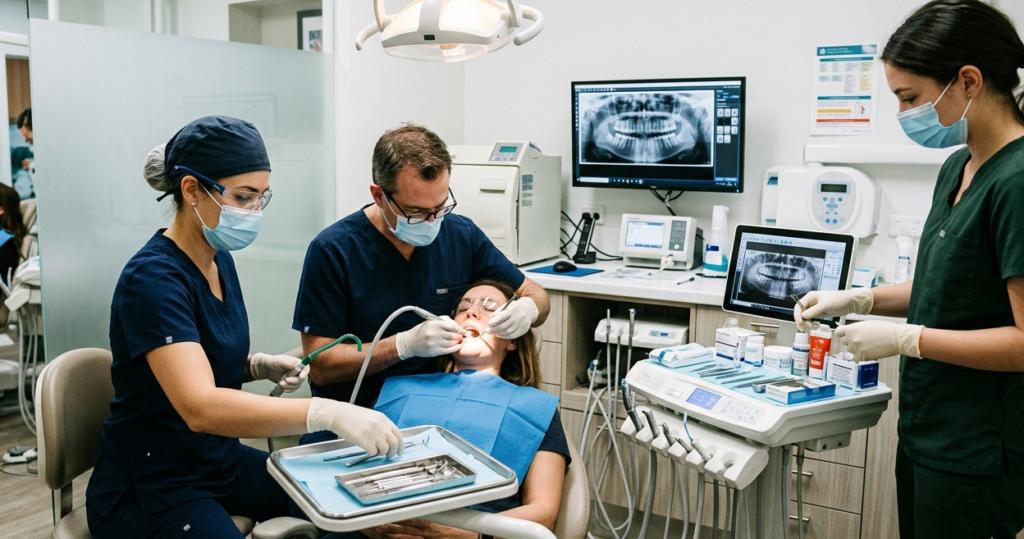
A dental assistant plays an important role in helping dental offices run smoothly. From preparing treatment rooms to supporting patient care, dental assistants help dentists, hygienists, and patients stay organized and informed. Their work includes clinical support and administrative tasks, making them valuable members of dental healthcare teams.
At Stautzenberger College, students can explore hands-on dental assisting education designed to build practical skills. If you enjoy working with people, staying organized, and supporting patient care, dental assisting may be a healthcare field worth exploring.
Understanding the Role of a Dental Assistant
While dentists diagnose and treat patients, dental assistants help prepare materials, organize equipment, and support daily office activities.
Some common dental assistant duties may include:
- Preparing treatment rooms before appointments.
- Sterilizing dental instruments and following infection-prevention procedures.
- Updating patient records and scheduling appointments.
- Assisting dentists during procedures.
- Reinforcing dentist-approved aftercare instructions.
- Taking dental X-rays when properly trained and authorized.
Responsibilities vary depending on state regulations, training, supervision, and workplace needs. Completing a diploma does not automatically authorize every regulated dental assisting duty.
Why Healthcare Teamwork Matters in Dentistry
Modern dental care relies on healthcare teamwork among dentists, hygienists, office staff, and dental assistants.
Dental assistants help coordinate activities between treatment rooms and support communication with patients. They may prepare instruments, explain appointment steps, and relay clinical questions to the dentist.
Strong teamwork helps dental practices remain organized while keeping patient needs at the center of care.
How Dental Assistants Support Practice Efficiency
Dental offices often manage multiple appointments each day. Dental assistants contribute to dental practice efficiency by helping teams prepare for appointments and coordinate daily tasks.
Dental assistants may help offices operate efficiently by:
- Preparing treatment rooms and maintaining supplies.
- Supporting patient flow between appointments.
- Assisting dentists chairside during treatments.
- Keeping basic office documentation organized.
- Following infection-control practices, including hand hygiene, appropriate PPE, and instrument sterilization.
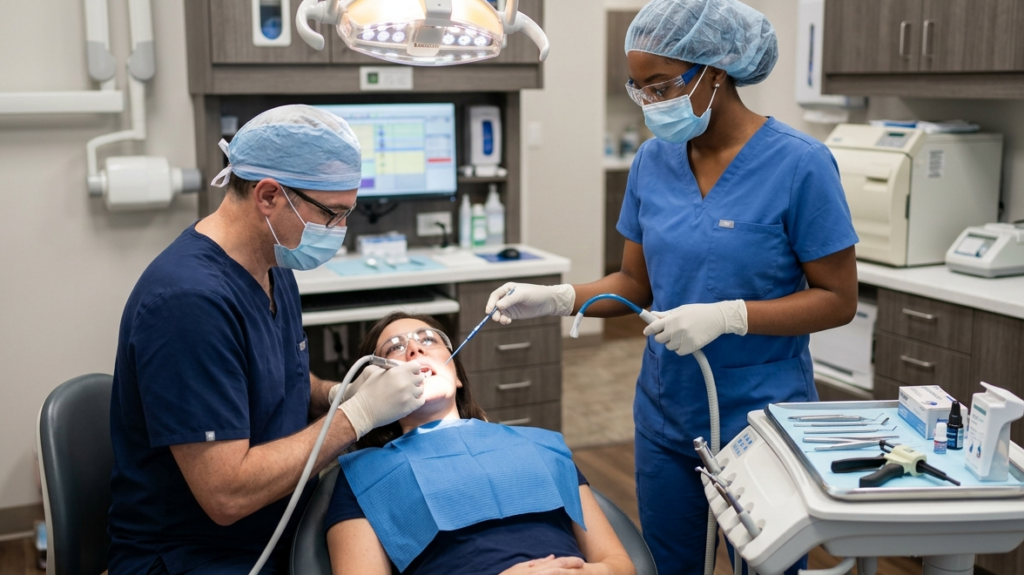
These responsibilities help dental teams maintain an organized workflow and focus on patient care.
How Dental Assistants Support Positive Patient Experiences
Many patients feel nervous before dental appointments. Dental assistants can help create a welcoming environment through reassurance, clear communication, and attention to patient concerns.
Their responsibilities may include greeting patients, explaining appointment steps, addressing routine questions within their role, and reinforcing instructions provided by the dental team.
These interactions help patients feel informed and supported throughout their visits.
Career Outlook for Dental Assistants
Dental assistants contribute to patient care, communication, and office coordination across dental healthcare settings.
According to the U.S. Bureau of Labor Statistics, employment of dental assistants is projected to grow 7% from 2025 to 2035. Employment opportunities and job responsibilities vary by employer, experience, and location.
For students interested in healthcare teamwork and patient interaction, dental assisting may offer a rewarding educational direction.
How Stautzenberger College Supports Future Dental Assistants
Stautzenberger College’s Dental Assisting Diploma introduces students to foundational dental office skills, including clinical support, infection prevention, patient communication, and administrative tasks.
The approximately 10-month hybrid program combines online coursework with in-person laboratory training at the Maumee campus and a 180-hour externship. These learning experiences help students practice skills relevant to dental office environments.
Skills Students May Develop During Training
- Chairside assisting techniques.
- Infection-prevention procedures.
- Dental terminology and radiography fundamentals.
- Office scheduling and communication.
- Patient record management.
- Professional healthcare teamwork.
The college’s “Stautz Strong” approach emphasizes student-focused, career-oriented education.
Explore Your Path in Dental Assisting
Dental assistants support daily operations, patient comfort, and communication in modern dental practices. From clinical preparation to administrative tasks, their contributions help dental teams provide organized, patient-focused care.
Interested in learning more? Explore Stautzenberger College’s Dental Assisting Diploma to review the curriculum, hybrid format, and admissions requirements.