


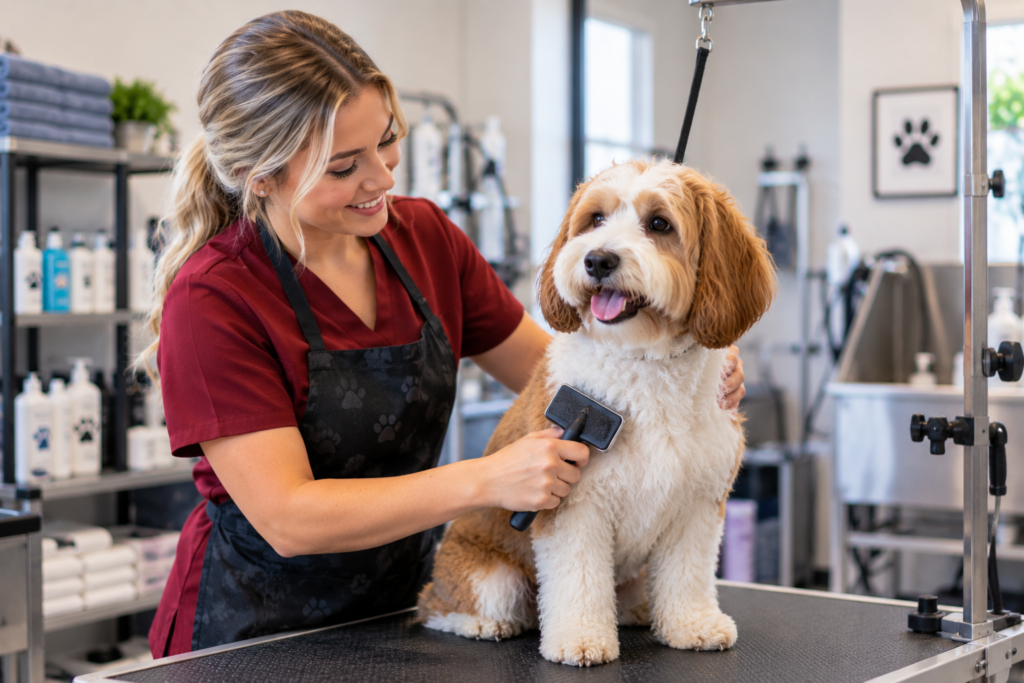
Veterinary assistants and groomers can support animal care in different but complementary ways. Veterinary assisting focuses on support within veterinary settings, while grooming focuses on coat care, hygiene, handling, and an animal’s external condition.
Training that introduces both areas can help students develop a broader foundation in companion-animal care. Stautzenberger College’s Veterinary Assistant and Grooming Diploma is a 12-month, 53-quarter-credit, 100% online program covering veterinary and grooming-related subjects.
Coursework introduces subjects including veterinary anatomy and terminology, companion-animal behavior, grooming theory and practice, and veterinary office management.
Understanding Veterinary Assistant Skills
Veterinary assistants provide support within animal-care environments and help veterinarians and veterinary technicians with routine tasks. Specific responsibilities depend on the workplace, supervision requirements, and applicable state law.
Education for veterinary assisting can introduce students to areas such as animal anatomy and physiology, veterinary terminology, behavior, professional practices, and the organization of veterinary workplaces.
Animal Behavior and Handling
Understanding animal behavior is an important part of working around companion animals. Animals may respond differently to unfamiliar people, environments, sounds, or handling.
Animal behavior and handling education can help students recognize behavioral cues and understand approaches to safer, humane animal handling. SC’s curriculum includes companion-animal behavior, learning theory, behavior modification, training, and enrichment.
Veterinary Knowledge and Terminology
Veterinary assistants work alongside professionals who use specialized terminology to communicate about animals, procedures, records, and care.
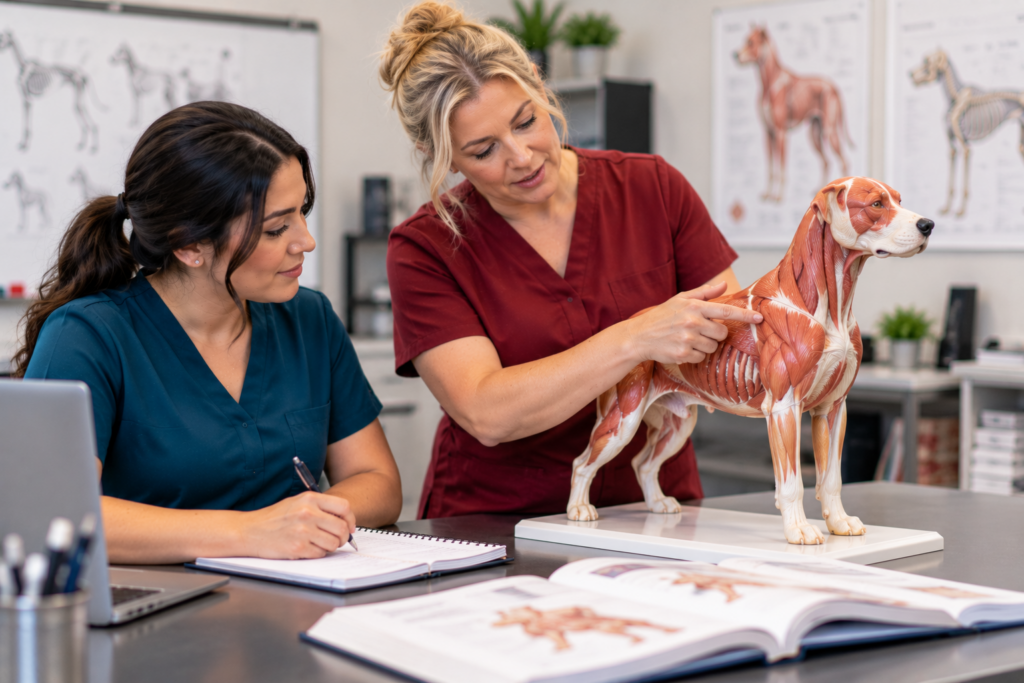
Courses in Veterinary Anatomy and Physiology, Veterinary Anatomy Systems and Functions, and Veterinary Medical Terminology can help students develop foundational knowledge for veterinary-support environments.
Understanding Professional Grooming Skills
Grooming involves more than improving an animal’s appearance. Groomers may provide bathing, brushing, clipping, trimming, and other services that support an animal’s hygiene and coat condition.
Grooming needs vary by breed, coat type, condition, and individual animal. Double-coated breeds, for example, can require grooming approaches that account for both the outer coat and undercoat. Other coat types may require different brushing, clipping, bathing, and styling techniques.
SC’s curriculum includes Animal Grooming Theory and Animal Grooming Lab coursework designed to introduce students to grooming concepts and practices.
Coat and Skin Observation
Regular grooming also creates opportunities to observe an animal’s external condition. Groomers may notice changes in an animal’s skin or coat that warrant attention from the owner or a veterinary professional.
Grooming education can cover selecting and using appropriate grooming products and techniques for different coat types while emphasizing safe and appropriate animal care.
Communication and Veterinary Office Skills
Animal-care environments also depend on organization and communication. Veterinary assistants and other animal-care professionals may interact with pet owners, coworkers, veterinarians, and veterinary technicians throughout the workday.
Communication skills can help animal-care professionals interact professionally with clients and team members. Administrative knowledge can also be relevant to responsibilities involving scheduling, client service, health records, and other veterinary-office processes.
SC’s curriculum includes Veterinary Office Management and professional communication coursework to help students develop knowledge of the administrative side of animal care.
Veterinary Assistant and Grooming Career Context
Veterinary assisting and grooming represent different occupational areas, and education and employment requirements can vary.
The U.S. Bureau of Labor Statistics projects employment of veterinary assistants and laboratory animal caretakers to grow 9% from 2025 to 2035, with about 23,200 openings projected each year, on average, over the decade. These national projections are not specific to SC graduates, and employment opportunities vary by employer, location, experience, and individual circumstances.
Grooming can follow a different training path. BLS notes that animal groomers often learn their skills under the guidance of experienced groomers, although education through grooming schools is also available.
Build a Foundation in Animal Care
SC’s Veterinary Assistant and Grooming Diploma combines online coursework in animal behavior, veterinary subjects, professional skills, and grooming. The program is designed to build foundational knowledge relevant to entry-level animal-care, grooming, and veterinary-support settings.
Knowledge of both veterinary support and grooming can provide a broader introduction to different areas of companion-animal care.
If animal care aligns with your interests, explore Stautzenberger College’s Veterinary Assistant and Grooming Diploma to learn about the curriculum, online format, and program requirements.