


How to become a certified
HVAC professional to start your career
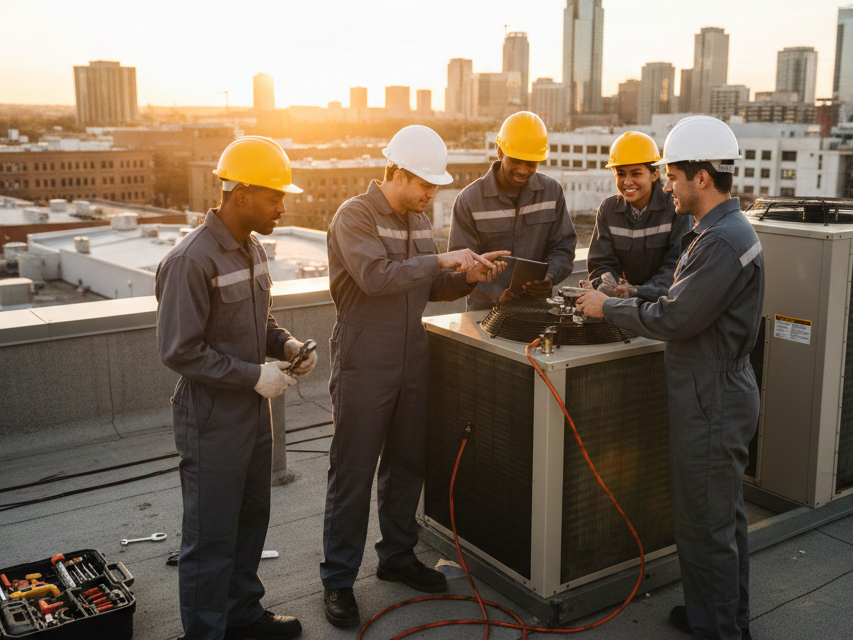
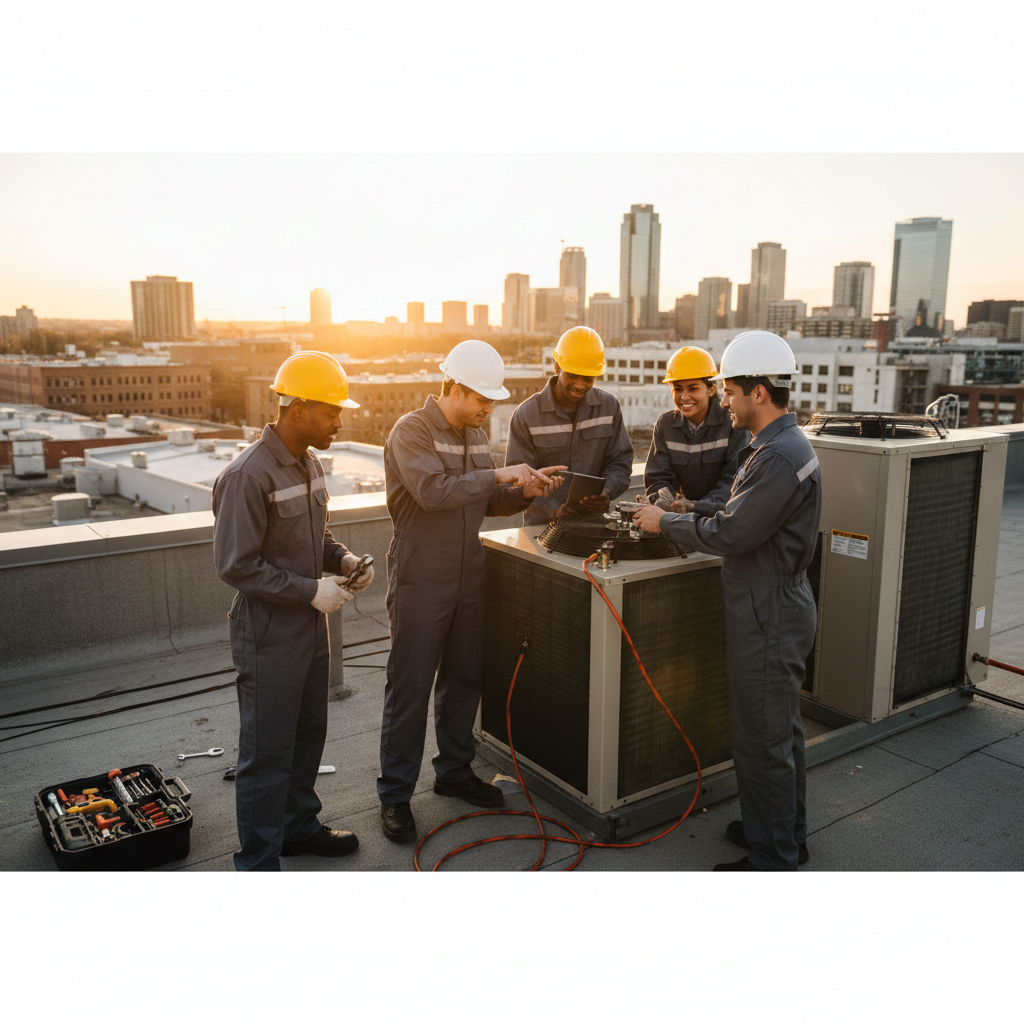
If you’re looking for a career that combines technical skill, problem-solving, and stable, high demand, look no further than the Heating, Ventilation, and Air Conditioning (HVAC) industry. Becoming a certified HVAC professional is a solid path to a rewarding career, one where you’re guaranteed to be an essential worker—after all,
who wants to live or work without functional climate control?
This has become easy to achieve as Stautzenberger College does offer courses or programs for HVAC industry that helps you get started in the market out there.
This guide is your straightforward blueprint for transitioning from interested newcomer to certified, well-paid HVAC technician.
What is an HVAC Technician?
The first step in any career journey is understanding the role. So, what is an HVAC technician? Simply put, an HVAC technician is a specialist who installs, maintains,
and repairs the systems that control the climate and air quality in residential and commercial buildings.
HVAC stands for:
- Heating: Furnaces, boilers, and heat pumps.
- Ventilation: Ductwork, air purifiers, and air exchange systems.
- Air Conditioning: Chillers, air conditioners, and refrigeration units.
You’re essentially a comfort specialist and a guardian of air quality. One day you might be troubleshooting a complex commercial chiller system, and the next,
you could be installing a new energy-efficient furnace for a family. It’s a hands-on, dynamic, and vital job.
Is HVAC a Good Career?
Before you commit, you need to know: is HVAC a good career? The short answer is yes—and the data strongly backs it up.
1. High Demand, Low Fluctuation
HVAC systems are in every building, and they break down no matter the economic climate. The U.S. Bureau of Labor Statistics (BLS) projects that employment
for HVAC mechanics and installers will grow at a rate of 8% from 2024 to 2034, which is significantly faster than the average for all occupations. Translation?
Job security. As older technicians retire and buildings become more complex and energy-conscious, the demand for new, skilled professionals is consistently high.
2. Excellent Earning Potential
Let’s address the crucial question: how much do HVAC techs make? According to the BLS, the median annual wage for heating, air conditioning, and refrigeration mechanics and installers was $59,810 in May 2024.
However, your earning potential increases significantly with experience and certification:
| Experience Level | Estimated Median Annual Salary (US) |
| Entry-Level/Apprentice | Starting around $39,130 |
| Intermediate Technician | $65,700 or more |
| Senior Technician/Supervisor | Upwards of $91,020+ |
Factor in overtime during peak seasons (extreme heat or cold), and the numbers look even better. Plus, you’re earning this without the massive student loan debt often associated with a four-year degree.
The Step-by-Step Guide to Becoming Certified
Ready to trade the classroom for a wrench? Here is your four-step roadmap for how to become a certified HVAC professional.
Step 1: Meet the Educational Prerequisite
Before any specialized training, you’ll need a foundational education.
- Requirement: A high school diploma or a GED is the standard minimum requirement to enroll in a trade school or apprenticeship program.
- Pro Tip: While in high school, focus on math, physics, and any shop or vocational classes you can take. They build the foundational technical skills you’ll use every day.
Step 2: Choose Your Training Path (School vs. Apprenticeship)
You have two primary routes to gain the necessary knowledge and skills:
Option A: Technical School/Community College (6 months – 2 years)
- The Focus: These programs provide focused classroom instruction and hands-on lab work on theory, diagnostics, and repairs. You’ll learn the fundamentals
of refrigeration, electrical systems, duct design, and more.
- The Focus: These programs provide focused classroom instruction and hands-on lab work on theory, diagnostics, and repairs. You’ll learn the fundamentals
- Timeline: Certificate programs can take as little as six months to a year, while an Associate’s Degree typically takes two years.
- The Benefit: Fast-tracks your foundational knowledge and prepares you quickly for certification exams.
Option B: Apprenticeship (3–5 years)
- The Focus: These programs combine paid on-the-job training under the supervision of a licensed professional with required classroom instruction.
You earn while you learn.
- The Focus: These programs combine paid on-the-job training under the supervision of a licensed professional with required classroom instruction.
- Timeline: Apprenticeships can last between three and five years, culminating in a Journeyman license in some states.
- The Benefit: You gain invaluable, real-world experience and start making a salary immediately, learning industry best practices from seasoned veterans.
Step 3: Get Your Essential Certifications
In the HVAC world, certification isn’t optional—it’s often legally required.
- EPA Section 608 Certification (Mandatory): This is the non-negotiable certification. The Environmental Protection Agency (EPA) requires any technician
who works with refrigerants (the chemical coolants in A/C and fridges) to pass the Section 608 exam. You will need one of four types: Type I (small appliances),
Type II (high-pressure systems like residential A/C), Type III (low-pressure systems like chillers), or Universal (all types). You cannot legally handle refrigerants
without this.
- EPA Section 608 Certification (Mandatory): This is the non-negotiable certification. The Environmental Protection Agency (EPA) requires any technician
- NATE Certification (Highly Recommended): The North American Technician Excellence (NATE) certification is an industry gold standard. It’s voluntary
but signals a high level of competency to employers and customers. NATE offers a wide range of specialty certifications (e.g., Air Conditioning, Heat Pumps,
Gas Furnaces) that can significantly boost your earning potential and marketability.
- NATE Certification (Highly Recommended): The North American Technician Excellence (NATE) certification is an industry gold standard. It’s voluntary
Step 4: Obtain State or Local Licensing (If Required)
Licensing requirements vary widely by state and even by municipality.
- Technician vs. Contractor: Some states require all technicians to be licensed, while others only require a license for independent contractors running
their own business.
- Technician vs. Contractor: Some states require all technicians to be licensed, while others only require a license for independent contractors running
- Journeyman Status: After completing an apprenticeship and gaining enough experience, you may be eligible to test for a Journeyman license,
which allows you to work independently.
- Journeyman Status: After completing an apprenticeship and gaining enough experience, you may be eligible to test for a Journeyman license,
- The Rule: Always check the specific licensing requirements for the state and city where you plan to work.
Your Future: Beyond the Technician Role (HVAC Careers)
The title “HVAC technician” is just the starting point. The industry is full of diverse and lucrative HVAC careers for those who are driven and continue their education.
- HVAC Installer/Service Technician: The bread and butter of the industry, focused on installation and repair.
- HVAC Engineer: Designing complex HVAC systems for large commercial buildings, hospitals, and industrial facilities. This often requires an engineering degree,
but deep field experience is invaluable.
- HVAC Engineer: Designing complex HVAC systems for large commercial buildings, hospitals, and industrial facilities. This often requires an engineering degree,
- Energy Auditor/Management Specialist: Analyzing existing systems to recommend and implement energy-efficient upgrades, a growing field due to climate
and cost concerns.
- Energy Auditor/Management Specialist: Analyzing existing systems to recommend and implement energy-efficient upgrades, a growing field due to climate
- Sales Representative: Leveraging technical knowledge to sell HVAC equipment, services, and maintenance contracts.
- HVAC Contractor/Business Owner: Many technicians eventually start their own companies, controlling their own schedule, clients, and income potential.
FAQs
Q. Do I need a college degree to start an HVAC career?
Absolutely not! That’s one of the best things about the trades. While you need a high school diploma or GED, you do not need a traditional college degree. Your fastest and most direct paths are through a technical school certificate program (6 months to 1 year) or a structured apprenticeship (3 to 5 years). Both routes focus on the practical, hands-on skills that actually pay the bills.
2. What’s the most important certification I need, and how long does it take to get?
The single most important, and often legally required, certification is the EPA Section 608 Certification. This license is mandatory if you plan to work with refrigerants. You can typically study for and take the exam after just a few weeks of preparation or alongside a short training course. For maximum marketability, however, start planning for the voluntary, but highly respected, NATE Certification once you have some field experience.
Q. Is the job physically demanding, and is there a lot of weekend/night work?
It can be both. An HVAC career is hands-on, so you need to be reasonably fit to lift heavy equipment (like furnaces or compressors), climb ladders, and work in cramped spaces (like attics or crawlspaces).
As for scheduling, while standard maintenance and installation are usually done during business hours, repairs and emergencies happen 24/7. Expect to be on call or work overtime during peak seasons (the hottest summer days and the coldest winter nights)—that’s often when your earning potential skyrockets!
Ready to Turn Up the Heat on Your Career?
The HVAC industry offers a clear, stable path to a skilled trade that is both highly demanded and well-compensated. It’s an honest day’s work for honest pay—and you get the satisfaction of making people comfortable in their homes and businesses.
If you’re ready to start your journey, visit our HVAC courses and prepare to build a future that’s always in demand.