


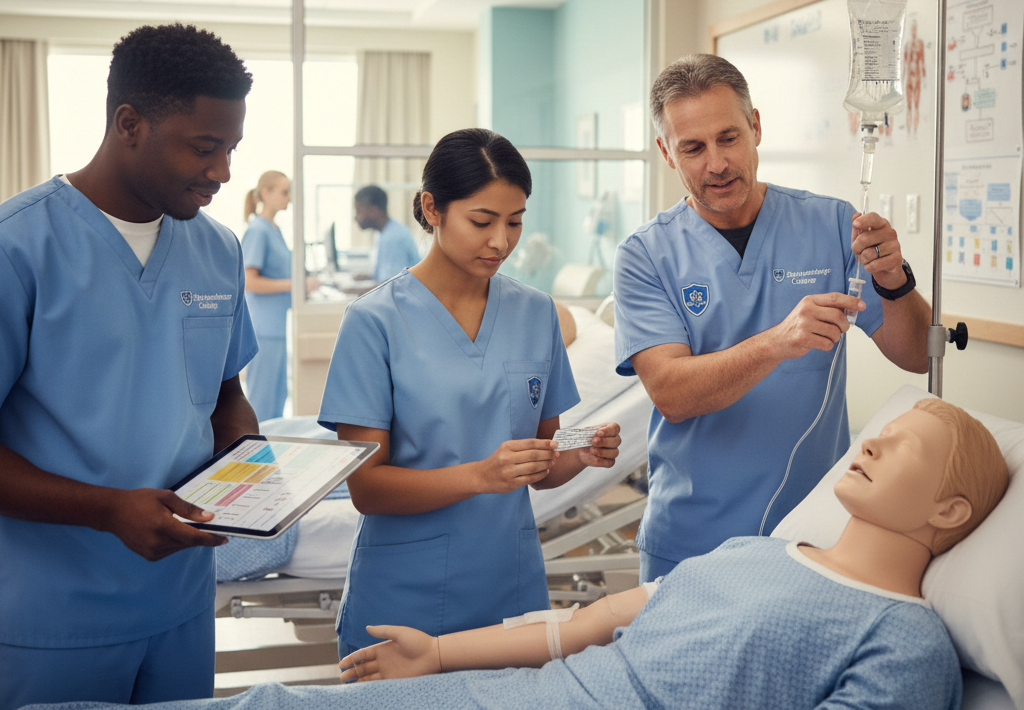
Healthcare is a dynamic and essential field, and at its heart are dedicated nursing professionals who provide compassionate and competent care.
Among these vital roles is the Licensed Practical Nurse (LPN), a frontline caregiver who plays a crucial role in patient well-being across diverse healthcare settings.
If you’re drawn to a career where you can directly impact lives and seek a practical pathway into the nursing profession, understanding the daily life
of an LPN is a great first step.
At Stautzenberger College, our Practical Nursing Program is meticulously designed to prepare you for the real-world demands and rewards
of this indispensable profession. We offer comprehensive training that equips you with the foundational knowledge and hands-on skills necessary to excel as an LPN.
This blog will pull back the curtain on the day-to-day schedule of an LPN, illustrating the varied responsibilities, challenges, and immense satisfaction that come with
a career in practical nursing.
The Versatile World of an LPN

The beauty of a career in practical nursing is its versatility. LPNs work in a wide array of environments, and their daily schedules can vary significantly based on their workplace. However, the core responsibilities revolve around direct patient care, collaboration with the healthcare team, and maintaining detailed records.
Common Work Settings for LPNs:
-
- Long-Term Care Facilities (Nursing Homes): This is one of the most common settings for LPNs, where they provide consistent care for residents.
-
- Hospitals: LPNs may work in various departments, often assisting Registered Nurses (RNs) with patient care.
-
- Physicians’ Offices and Clinics: Assisting doctors with patient intake, procedures, and administrative tasks.
-
- Home Healthcare: Providing individualized care to patients in their homes.
-
- Rehabilitation Centers: Helping patients recover from injuries or illnesses.
-
- Schools: Assisting school nurses with student health needs.
Regardless of the setting, an LPN’s day is typically fast-paced, requiring strong organizational skills, critical thinking, and a compassionate approach.
A Glimpse into an LPN’s Day (Long-Term Care Example):
Let’s imagine an LPN working a typical 7:00 AM to 3:00 PM shift in a long-term care facility.
- 7:00 AM – 7:30 AM: Shift Handoff and Report: The day begins with a crucial shift change. The outgoing LPNs provide a detailed report to the incoming team.
This includes updates on each patient’s condition, any new orders, changes in status, specific concerns, and tasks that need to be completed.
This ensures continuity of care.
- 7:30 AM – 9:00 AM: Morning Rounds and Assessments: After receiving the report, the LPN immediately begins their rounds. This involves:
-
- “Five Rights” of Medication Administration: Ensuring the right patient, right drug, right dose, right route, and right time.
-
- Documentation: Accurately charting all medications given, dosages, and any patient reactions.
-
- Performing Treatments: Changing wound dressings, inserting catheters, performing ostomy care, or other physician-ordered procedures.
-
- Monitoring Blood Glucose: For diabetic patients, checking blood sugar levels and administering insulin as needed.
- Monitoring Blood Glucose: For diabetic patients, checking blood sugar levels and administering insulin as needed.
- 11:00 AM – 12:00 PM: Documentation and Communication With morning tasks complete, the LPN dedicates time to thorough documentation. This is critical for legal reasons and to ensure the entire healthcare team is updated. They record:
-
- Patient Assessments: Detailed observations and findings from morning rounds.
-
- Medication Administration: All drugs given and patient responses.
-
- Treatments: Procedures performed and wound status.
-
- Patient Communication: Any significant conversations with patients or family members.
-
- Communicating with Physicians: Calling doctors for new orders, clarifications, or reporting significant changes in a patient’s condition.
- 12:00 PM – 1:00 PM: Lunch Break (and continued vigilance): While a scheduled break is important, an LPN must remain ready to respond to emergencies or urgent patient needs.
- 1:00 PM – 2:30 PM: Afternoon Tasks, Admissions/Discharges, and New Orders: The afternoon brings a new set of tasks:
-
- New Orders: Reviewing and implementing any new physician orders, which might include new medications, changes in diet, or additional treatments.
-
- Admissions/Discharges: Assisting with admitting new patients (taking initial history, vital signs, orienting them to the facility) or preparing patients for discharge.
-
- Patient Education: Providing instructions to patients or their families regarding medication, wound care, or follow-up appointments.
-
- Team Collaboration: Working closely with RNs, NAs, therapists, and other healthcare professionals.
- 2:30 PM – 3:00 PM: Preparing for Handoff: As the shift nears its end, the LPN prepares for the next shift:
-
- Final Rounds: Quick checks on all assigned patients.
-
- Updating Documentation: Ensuring all charting is current.
-
- Preparing Report: Organizing information for a clear and concise handoff to the evening shift.
- Preparing Report: Organizing information for a clear and concise handoff to the evening shift.
Essential Qualities for a Successful LPN
Beyond the technical skills, successful LPNs possess key personal attributes:
-
- Compassion and Empathy: A genuine desire to care for others.
-
- Attention to Detail: Meticulousness in medication administration and documentation.
-
- Communication Skills: Clear and effective communication with patients, families, and the healthcare team.
-
- Problem-Solving: The ability to assess situations and act quickly.
-
- Patience and Emotional Strength: Dealing with challenging patient situations with grace.
-
- Physical Stamina: The job often involves standing, walking, lifting, and bending.
- Physical Stamina: The job often involves standing, walking, lifting, and bending.
The Stautzenberger College Practical Nursing Advantage
Our Practical Nursing program at Stautzenberger College is specifically structured to prepare you for this demanding yet incredibly fulfilling career.
Our curriculum focuses on:
-
- Fundamental Nursing Skills: Mastering vital signs, medication administration, wound care, and patient assessments.
-
- Anatomy, Physiology & Pharmacology: A strong understanding of the human body and how medications work.
-
- Clinical Rotations: Gaining hands-on experience in various healthcare settings under the guidance of experienced nursing instructors.
-
- Patient-Centered Care: Developing the empathy and communication skills crucial for effective nursing.
-
- NCLEX-PN Preparation: Our program is designed to prepare you for the National Council Licensure Examination for Practical Nurses (NCLEX-PN), which is required for licensure.
By combining rigorous academic instruction with extensive practical training, we empower our graduates to confidently step into the role of a competent and compassionate LPN.
Become a Certified Practical Nurse!
The day-to-day schedule of an LPN is a blend of routine tasks and unexpected challenges, all centered around providing essential patient care.
It’s a role that demands dedication, skill, and a compassionate heart.
Whether in a long-term care facility, a bustling hospital, or a quiet home setting, LPNs are vital members of the healthcare team, directly contributing
to the well-being and recovery of their patients.
If you’re looking for a direct and impactful way to enter the nursing profession, our Practical Nursing Program at Stautzenberger College offers the ideal pathway.
Begin your journey toward a rewarding career where every day brings the opportunity to make a real difference in people’s lives through practical nursing.
FAQs
Q1. How long does the Practical Nursing program at Stautzenberger College take?
A: Our Practical Nursing program is designed for efficient completion, allowing you to enter the workforce as an LPN sooner.
Please contact our admissions team for the most current program length and scheduling options.
Q2. What is the difference between an LPN and an RN?
A: While both are nurses, their scope of practice and educational requirements differ. LPNs provide basic bedside care, administer medications,
and monitor patients. Registered Nurses (RNs) typically have a broader scope, performing more complex assessments, developing care plans, and often supervising
LPNs and other healthcare staff. RNs generally require an Associate’s Degree in Nursing (ADN) or a Bachelor of Science in Nursing (BSN).
Q3. What are the career advancement opportunities for an LPN?
A: LPNs can advance their careers by gaining experience in specialized areas (e.g., geriatrics, wound care). Many LPNs also choose to pursue further education
to become Registered Nurses (RNs) through LPN-to-RN bridge programs, which can open doors to more advanced roles and responsibilities.
-
- Checking on Patients: Visiting each assigned patient, performing initial assessments, checking vital signs (temperature, pulse, respiration, blood pressure,
oxygen saturation).
- Checking on Patients: Visiting each assigned patient, performing initial assessments, checking vital signs (temperature, pulse, respiration, blood pressure,
-
- Assessing Patient Needs: Observing for any changes in condition, pain levels, or new complaints.
-
- Assisting with Activities of Daily Living (ADLs): While often delegated to Nursing Assistants (NAs), LPNs oversee and may assist with personal hygiene, dressing, and feeding, especially for patients requiring more complex care.
- Assisting with Activities of Daily Living (ADLs): While often delegated to Nursing Assistants (NAs), LPNs oversee and may assist with personal hygiene, dressing, and feeding, especially for patients requiring more complex care.
- 9:00 AM – 11:00 AM: Medication Administration and Treatments: This is a core responsibility. The LPN meticulously prepares and administers prescribed medications to patients. This requires:
-
- “Five Rights” of Medication Administration: Ensuring the right patient, right drug, right dose, right route, and right time.
-
- Documentation: Accurately charting all medications given, dosages, and any patient reactions.
-
- Performing Treatments: Changing wound dressings, inserting catheters, performing ostomy care, or other physician-ordered procedures.
-
- Monitoring Blood Glucose: For diabetic patients, checking blood sugar levels and administering insulin as needed.
- Monitoring Blood Glucose: For diabetic patients, checking blood sugar levels and administering insulin as needed.
- 11:00 AM – 12:00 PM: Documentation and Communication With morning tasks complete, the LPN dedicates time to thorough documentation. This is critical for legal reasons and to ensure the entire healthcare team is updated. They record:
-
- Patient Assessments: Detailed observations and findings from morning rounds.
-
- Medication Administration: All drugs given and patient responses.
-
- Treatments: Procedures performed and wound status.
-
- Patient Communication: Any significant conversations with patients or family members.
-
- Communicating with Physicians: Calling doctors for new orders, clarifications, or reporting significant changes in a patient’s condition.
- 12:00 PM – 1:00 PM: Lunch Break (and continued vigilance): While a scheduled break is important, an LPN must remain ready to respond to emergencies or urgent patient needs.
- 1:00 PM – 2:30 PM: Afternoon Tasks, Admissions/Discharges, and New Orders: The afternoon brings a new set of tasks:
-
- New Orders: Reviewing and implementing any new physician orders, which might include new medications, changes in diet, or additional treatments.
-
- Admissions/Discharges: Assisting with admitting new patients (taking initial history, vital signs, orienting them to the facility) or preparing patients for discharge.
-
- Patient Education: Providing instructions to patients or their families regarding medication, wound care, or follow-up appointments.
-
- Team Collaboration: Working closely with RNs, NAs, therapists, and other healthcare professionals.
- 2:30 PM – 3:00 PM: Preparing for Handoff: As the shift nears its end, the LPN prepares for the next shift:
-
- Final Rounds: Quick checks on all assigned patients.
-
- Updating Documentation: Ensuring all charting is current.
-
- Preparing Report: Organizing information for a clear and concise handoff to the evening shift.
- Preparing Report: Organizing information for a clear and concise handoff to the evening shift.
Essential Qualities for a Successful LPN
Beyond the technical skills, successful LPNs possess key personal attributes:
-
- Compassion and Empathy: A genuine desire to care for others.
-
- Attention to Detail: Meticulousness in medication administration and documentation.
-
- Communication Skills: Clear and effective communication with patients, families, and the healthcare team.
-
- Problem-Solving: The ability to assess situations and act quickly.
-
- Patience and Emotional Strength: Dealing with challenging patient situations with grace.
-
- Physical Stamina: The job often involves standing, walking, lifting, and bending.
- Physical Stamina: The job often involves standing, walking, lifting, and bending.
The Stautzenberger College Practical Nursing Advantage
Our Practical Nursing program at Stautzenberger College is specifically structured to prepare you for this demanding yet incredibly fulfilling career.
Our curriculum focuses on:
-
- Fundamental Nursing Skills: Mastering vital signs, medication administration, wound care, and patient assessments.
-
- Anatomy, Physiology & Pharmacology: A strong understanding of the human body and how medications work.
-
- Clinical Rotations: Gaining hands-on experience in various healthcare settings under the guidance of experienced nursing instructors.
-
- Patient-Centered Care: Developing the empathy and communication skills crucial for effective nursing.
-
- NCLEX-PN Preparation: Our program is designed to prepare you for the National Council Licensure Examination for Practical Nurses (NCLEX-PN), which is required for licensure.
By combining rigorous academic instruction with extensive practical training, we empower our graduates to confidently step into the role of a competent and compassionate LPN.
Become a Certified Practical Nurse!
The day-to-day schedule of an LPN is a blend of routine tasks and unexpected challenges, all centered around providing essential patient care.
It’s a role that demands dedication, skill, and a compassionate heart.
Whether in a long-term care facility, a bustling hospital, or a quiet home setting, LPNs are vital members of the healthcare team, directly contributing
to the well-being and recovery of their patients.
If you’re looking for a direct and impactful way to enter the nursing profession, our Practical Nursing Program at Stautzenberger College offers the ideal pathway.
Begin your journey toward a rewarding career where every day brings the opportunity to make a real difference in people’s lives through practical nursing.
FAQs
Q1. How long does the Practical Nursing program at Stautzenberger College take?
A: Our Practical Nursing program is designed for efficient completion, allowing you to enter the workforce as an LPN sooner.
Please contact our admissions team for the most current program length and scheduling options.
Q2. What is the difference between an LPN and an RN?
A: While both are nurses, their scope of practice and educational requirements differ. LPNs provide basic bedside care, administer medications,
and monitor patients. Registered Nurses (RNs) typically have a broader scope, performing more complex assessments, developing care plans, and often supervising
LPNs and other healthcare staff. RNs generally require an Associate’s Degree in Nursing (ADN) or a Bachelor of Science in Nursing (BSN).
Q3. What are the career advancement opportunities for an LPN?
A: LPNs can advance their careers by gaining experience in specialized areas (e.g., geriatrics, wound care). Many LPNs also choose to pursue further education
to become Registered Nurses (RNs) through LPN-to-RN bridge programs, which can open doors to more advanced roles and responsibilities.